


Carbon ion radiotherapy appears on Japan’s ministry-issued list of Advanced Medical Care as Advanced Medical Care A, technique No. 2. This article is about the system, not about outcomes: which scope counts as Advanced Medical Care, how the bill is split, and which hospitals appear on the official register. Every fact below comes from Ministry of Health, Labour and Welfare (MHLW) publications.
For the full picture of how the Advanced Medical Care category works — including the difference between Type A and Type B — see our guide: Advanced Medical Care in Japan: What Type A and Type B Actually Mean.
What Advanced Medical Care actually is
Advanced Medical Care (先進医療) is one of the categories of “evaluation-stage care” (評価療養) designated by the Minister of Health, Labour and Welfare under the 2006 act amending the Health Insurance Act (Act No. 83 of 2006). It allows techniques that have not yet entered insurance coverage to be used alongside insured treatment while they are evaluated for possible future coverage. Each technique carries facility standards, and insured medical institutions that meet them may perform it after notification. Per the MHLW overview page, 73 techniques are designated as of August 2026 (令和8年8月現在).

The phrase “not yet covered by insurance” matters. The indications written on the Advanced Medical Care list describe the part that insurance does not pay for. Diseases and conditions that have already entered insurance coverage sit outside this list, governed by the fee schedule. This article does not attempt to draw that second line — we did not verify it against a primary source at the time of writing, and guessing is not an option here. Confirm applicability with the treating institution.
What the notification says for technique No. 2
From the MHLW “Outline of each Advanced Medical Care technique”, as of July 2026 (令和8年7月現在):
| Field | As published (Japanese) | English rendering |
|---|---|---|
| Number | 先進医療A 第2号 | Advanced Medical Care A, No. 2 |
| Technique | 重粒子線治療 | Carbon ion radiotherapy |
| Indications | 肺・縦隔腫瘍、消化管腫瘍、肝胆膵腫瘍、泌尿器腫瘍又は転移性腫瘍(いずれも根治的な治療法が可能なものに限る。) | Lung and mediastinal tumours, gastrointestinal tumours, hepato-biliary-pancreatic tumours, urological tumours, or metastatic tumours — in each case limited to those for which curative treatment is feasible |
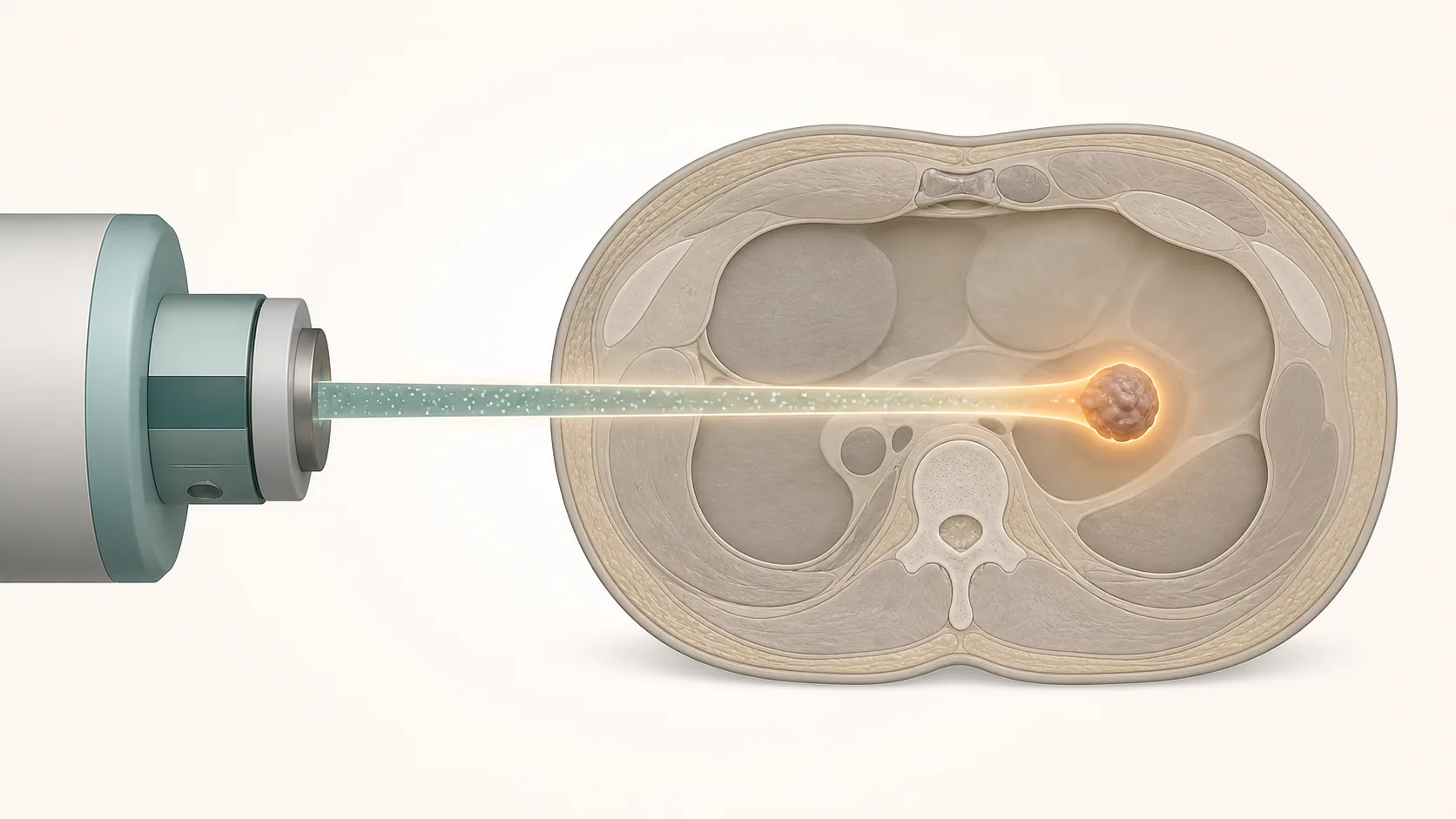
| Outline | 重粒子線(炭素イオン線)を体外から病巣に対して照射する治療法。 | A treatment that irradiates the lesion with heavy particle beams (carbon ion beams) from outside the body |
| jRCT ID | not listed | — |
The parenthetical limitation is part of the published wording, not an editorial gloss. Whether a given case falls within the indications is determined by the medical institution.
How the cost is split
The cost attributable to the Advanced Medical Care itself is paid entirely by the patient. The portion shared with ordinary treatment — consultation, testing, medication, hospitalisation fees — is handled as ordinary insured care, so the patient pays only the co-payment set by their health insurance scheme. The MHLW illustrates it with this example:
| Component | Amount (MHLW example) | Who pays |
|---|---|---|
| Total medical cost | ¥1,000,000 | — |
| Advanced Medical Care portion | ¥200,000 | Patient pays in full |
| Portion shared with ordinary treatment | ¥800,000 | 70% (¥560,000) paid by insurance / 30% (¥240,000) patient co-payment |

The high-cost medical expense benefit system applies to the insured co-payment. The ministry also states plainly that the Advanced Medical Care portion varies by type of care and by hospital, so there is no single figure. This article does not quote prices.
Which institutions are on the register
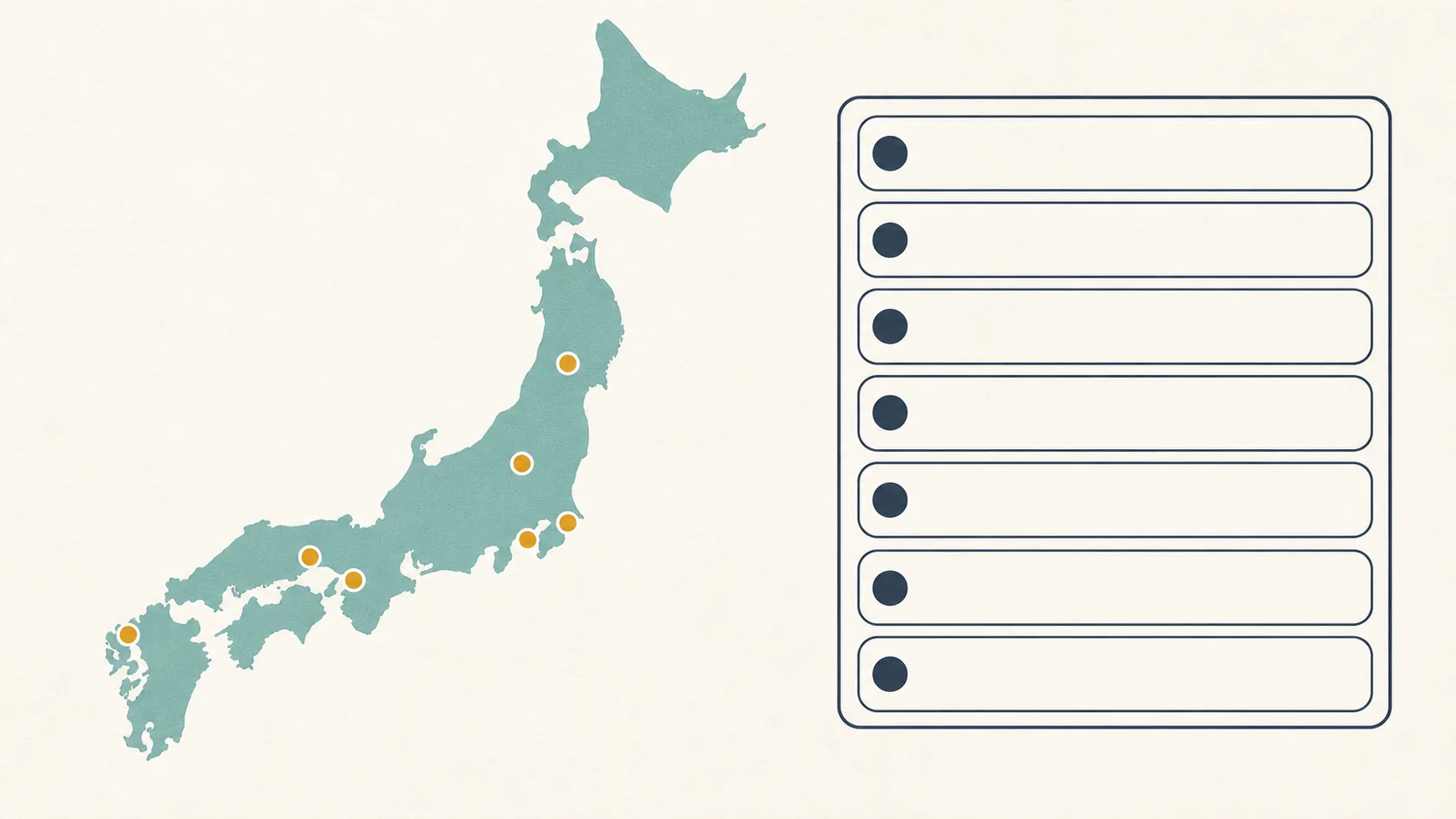
The MHLW “List of medical institutions performing Advanced Medical Care” (as of July 2026) records 28 techniques and 3,150 entries for Advanced Medical Care A, and 45 techniques and 379 entries for Advanced Medical Care B. Under technique No. 2, carbon ion radiotherapy, seven entries appear:
| Prefecture | Institution (official Japanese name) |
|---|---|
| Chiba | 国立研究開発法人量子科学技術研究開発機構 QST病院 |
| Hyogo | 兵庫県立粒子線医療センター |
| Gunma | 群馬大学医学部附属病院 |
| Saga | 九州国際重粒子線がん治療センター |
| Kanagawa | 神奈川県立がんセンター |
| Osaka | 大阪重粒子線センター |
| Yamagata | 山形大学医学部附属病院 |
This is a register of notifications published by the ministry. It is not a ranking and not a recommendation. Tsubaki Trading does not arrange referrals or appointments.
How to check the current position yourself
The register changes as the Advanced Medical Care Council reviews techniques. The shortest route is to read the technique name and indications on the MHLW “Outline of each Advanced Medical Care technique”, and the notified institutions on the “List of medical institutions performing Advanced Medical Care”. Both pages carry a reference date at the top — start there. Some techniques also list a jRCT registration ID, which lets you follow the study record in Japan’s clinical trial registry.

Procedurally, Advanced Medical Care is provided when a patient requests it in the course of ordinary insured care and the physician judges it necessary and reasonable. The institution explains the treatment and the costs, and the patient signs a consent form after understanding them. Keep the receipts — they are needed for the medical expense deduction.
If you are still comparing modalities rather than checking one, our earlier introduction to advanced radiotherapy in Japan covers BNCT, proton and carbon ion side by side. This article stays on the regulatory layer.
FAQ
Is carbon ion radiotherapy covered by Japanese health insurance?
When it is provided as Advanced Medical Care, the Advanced Medical Care portion is paid entirely by the patient; only the components shared with ordinary treatment — consultation, testing, medication, hospitalisation — fall under insurance. Diseases and conditions that have entered insurance coverage sit outside the Advanced Medical Care list and are governed by the fee schedule. Confirm any individual case with the treating institution.
What indications are listed for Advanced Medical Care A No. 2?
The published wording covers lung and mediastinal tumours, gastrointestinal tumours, hepato-biliary-pancreatic tumours, urological tumours, and metastatic tumours, in each case limited to those for which curative treatment is feasible. The limitation in parentheses is part of the official text, and eligibility is determined by the medical institution.
How many institutions perform carbon ion radiotherapy under this listing?
Seven entries appear under technique No. 2 in the MHLW register as of July 2026, one each in Chiba, Hyogo, Gunma, Saga, Kanagawa, Osaka and Yamagata. The count changes with notifications, so check the register for the current figure.
What is the difference between Advanced Medical Care A and B?
Both are evaluation-stage care designated by the Minister of Health, Labour and Welfare, but they are published as separate categories with different volumes. As of July 2026, category A holds 28 techniques across 3,150 entries and category B holds 45 techniques across 379 entries. Carbon ion radiotherapy is No. 2 in category A.
References
- MHLW, “Outline of Advanced Medical Care” link (Source: Ministry of Health, Labour and Welfare website)
- MHLW, “Outline of each Advanced Medical Care technique”, as of July 2026 link (Source: Ministry of Health, Labour and Welfare website)
- MHLW, “List of medical institutions performing Advanced Medical Care”, as of July 2026 link (Source: Ministry of Health, Labour and Welfare website)
Compiled and translated from material published on the Ministry of Health, Labour and Welfare website(厚生労働省ホームページの公表資料を加工して作成).
Information as of: 10 August 2026 (the MHLW pages cited carry a reference date of July 2026).
Source: the MHLW publications listed above. Tsubaki Trading Co., Ltd. is a Japan-registered company holding a pharmaceutical wholesale distribution licence issued by the Tokyo Metropolitan Government (No. 5313250689), and works with these regulatory documents directly. This article is information only. It is not medical advice, diagnosis or a treatment recommendation, and it is not advertising for prescription medicines. We are not a medical institution and do not guarantee acceptance or outcomes at any institution. See our Editorial & Medical Information Policy.