


Japanese trade media publish a monthly round-up of what the US Food and Drug Administration approved. The July 2026 edition ran on 7 August. Rather than repeat it product by product, this article answers the question we are actually asked when those round-ups circulate: an approval in the United States — when does that reach Japan, and by what route?
One editorial note before the substance. No indications, dosages or efficacy figures for any individual medicine appear below. Most products on a US approval list are not approved in Japan, and Japan’s Pharmaceuticals and Medical Devices Act restricts what may be published about unapproved medicines. What follows is the regulatory picture only.
What the July 2026 list actually contains
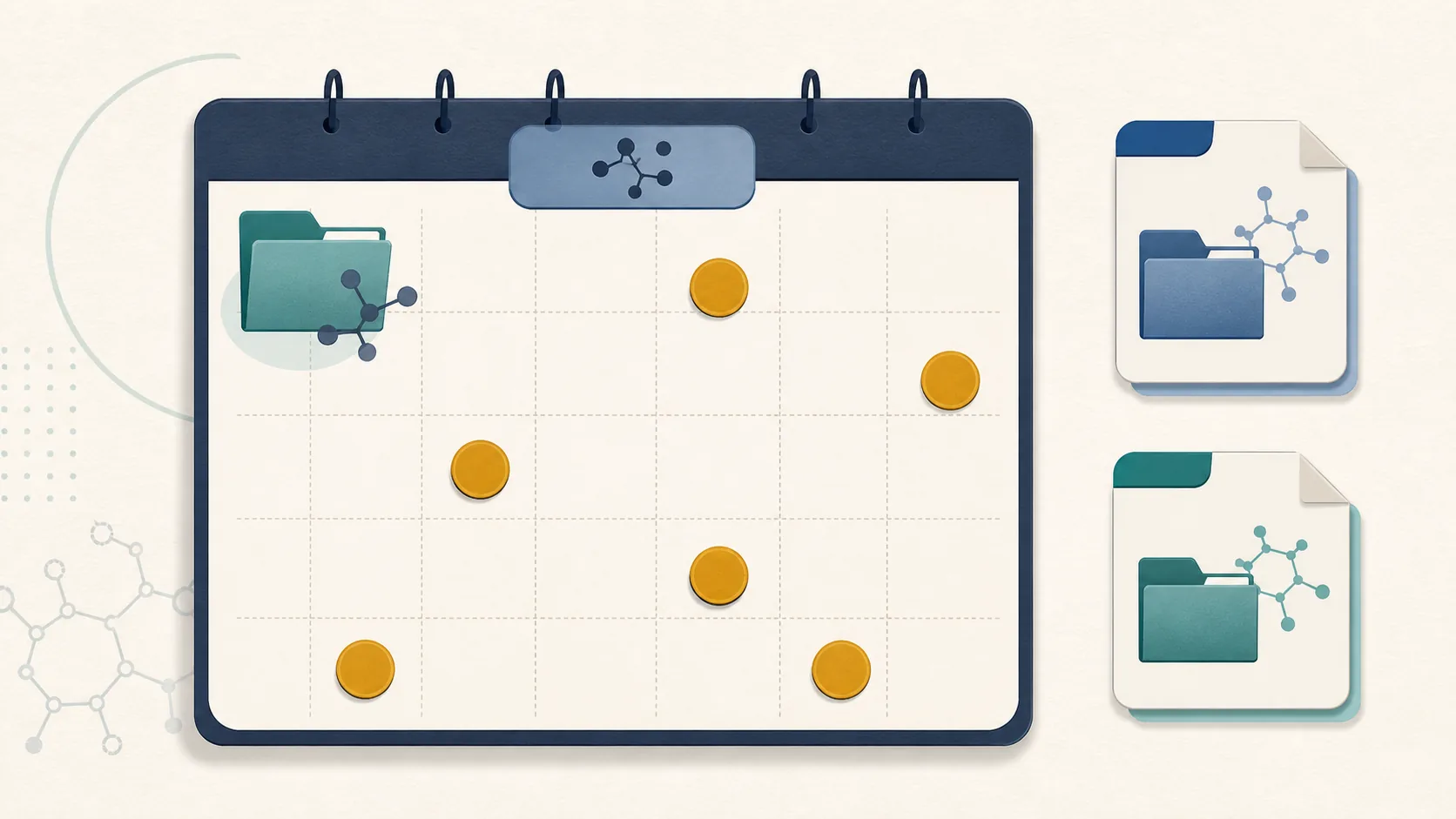
The FDA’s own “Novel Drug Approvals for 2026” page records six novel drug approvals dated in July 2026 — on 7, 14, 15, 22 and 24 July, with two falling on the 24th. For the year to date the same page lists 30 novel drug approvals, with content current as of 5 August 2026.
A caveat that matters when you compare sources: the FDA’s novel-approvals list counts new molecular entities and new therapeutic biologics reviewed by CDER. It does not count label expansions for medicines already approved, and it does not count biosimilars. Trade-press monthly round-ups usually fold all three together, so their headline count for the same month will legitimately be higher than the FDA’s. Neither number is wrong; they answer different questions.
Why “FDA approved” is not the same as “available in Japan”
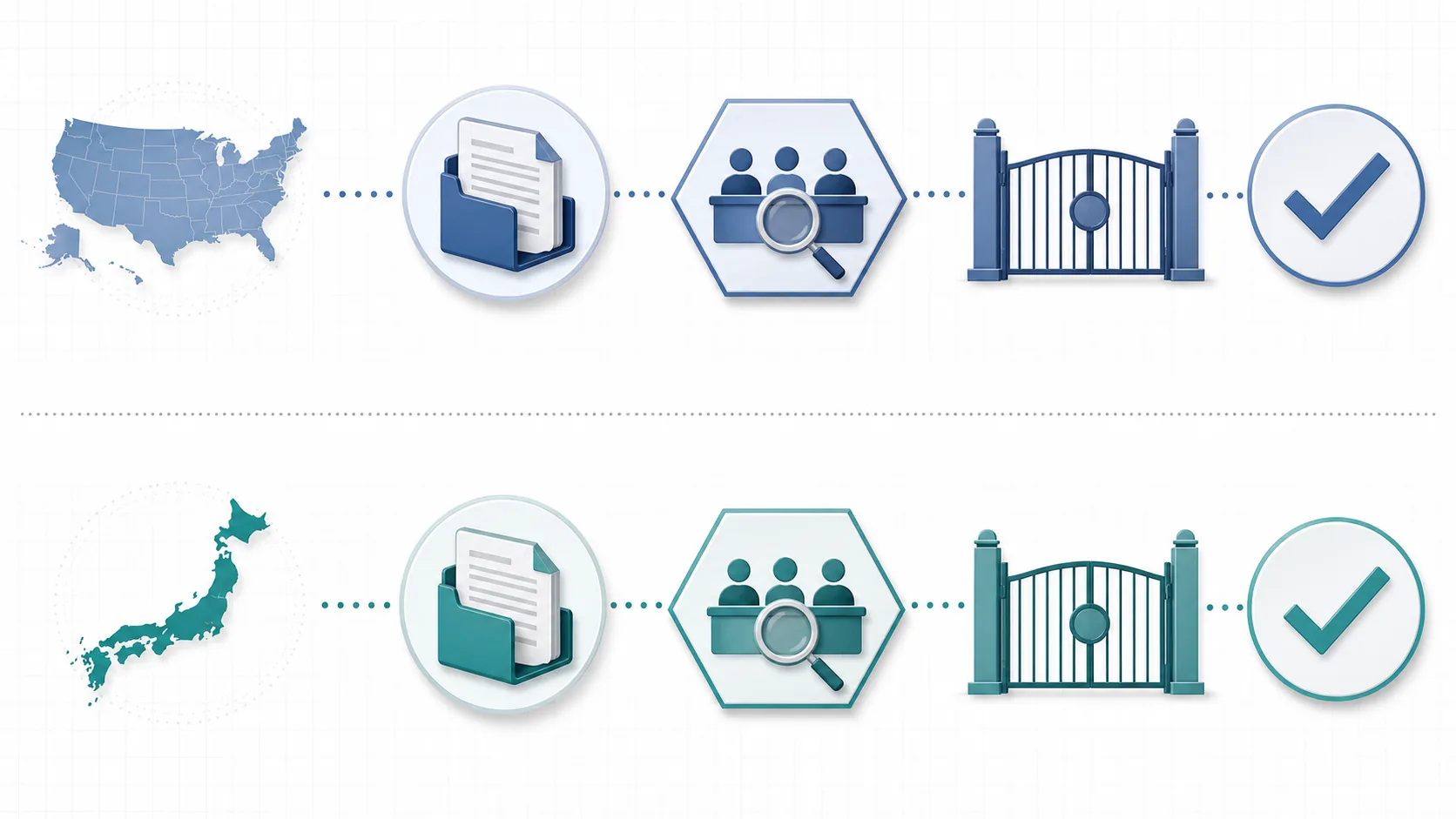
A US approval creates no rights in Japan. Marketing a medicine in Japan requires its own approval under the Pharmaceuticals and Medical Devices Act, granted on a Japanese review of that product’s own dossier. The two systems run in parallel, and a product can be approved in one for years before a Japanese application is even filed — or without one ever being filed.
That gap is the practical reason a US approval list is interesting to a Japanese reader but not directly actionable. The useful question is not “was it approved” but “where does it sit in the Japanese pipeline”.
Japan’s official route for medicines already approved overseas
Japan runs a standing mechanism for exactly this situation: the Council on Unapproved and Off-label Drugs with High Medical Need (医療上の必要性の高い未承認薬・適応外薬検討会議), convened by the Ministry of Health, Labour and Welfare. Academic societies submit requests; the council assesses medical need; where the need is recognised, the ministry issues a development request to a company or opens a call for a developer.

Scope, as published by the ministry, covers three situations:
- Medicines approved in the United States, United Kingdom, Germany, France, Canada or Australia but not in Japan
- Indications approved — or widely used — in those countries but not approved in Japan
- Products unapproved in the West as well, where a domestic Phase III trial is under way or complete, an authoritative paper has been published, or there is a track record under Advanced Medical Care B
In June 2014 the ministry added a fast-track route, the Scheme for Rapid Authorisation of Unapproved Drugs (未承認薬迅速実用化スキーム). The fourth round of requests has been open on a rolling basis since 1 July 2015. The council’s most recent session listed on the ministry’s page is its 68th, held on 25 May 2026; the preceding four were 6 February 2026, 12 December 2025, 29 September 2025 and 4 July 2025.
The outcome of that process is itself published: the ministry maintains a list of medicines for which a development request was issued or a developer sought, last updated 15 December 2025.
What this means if you are sourcing, or travelling
The route above is institutional. It runs through academic societies, the ministry and companies — not through individual purchase, and not through a distributor deciding to import something on request. A medicine that has not cleared Japanese approval cannot be supplied into Japanese commerce on the strength of a foreign approval, whatever the medical need.
For a business buyer the practical takeaway is narrower and more useful: when a product appears on a foreign approval list, the question to ask a Japanese counterparty is which of the three statuses it holds here — approved, under application, or not yet in the pipeline. Those three answers imply completely different timelines.

How to check a specific product yourself
Four public sources cover most of what you need, and all four are free.
- FDA — Novel Drug Approvals for the annual list, and Drugs@FDA for the individual approval record
- PMDA for Japanese review reports and approval information
- MHLW — the development-request list to see whether a product has already been taken up through the unapproved-drugs council
- jRCT, Japan’s clinical trial registry, to see whether a domestic study is running
Each of those pages carries its own reference date. Read it before you rely on the page — these lists move.

For a worked example of how a Japanese regulatory listing is structured and how to read it, see our note on carbon ion radiotherapy under Japan’s Advanced Medical Care system. For recent Japanese-side developments, see our Japan pharma briefs.
FAQ
How many new medicines did the FDA approve in July 2026?
The FDA’s Novel Drug Approvals page records six novel drug approvals dated in July 2026. That count covers new molecular entities and new therapeutic biologics reviewed by CDER only. It excludes label expansions for already-approved medicines and excludes biosimilars, so monthly totals reported by trade media are usually higher.
Does FDA approval mean a medicine can be sold in Japan?
No. Marketing a medicine in Japan requires a separate approval under Japan’s Pharmaceuticals and Medical Devices Act, based on a Japanese review of that product’s own application. A foreign approval creates no rights in Japan, and there is no automatic recognition between the two systems.
Is there an official way to get an overseas-approved medicine reviewed in Japan?
Yes. The Ministry of Health, Labour and Welfare convenes the Council on Unapproved and Off-label Drugs with High Medical Need. Academic societies submit requests covering medicines or indications approved in the US, UK, Germany, France, Canada or Australia, and the ministry can issue a development request to a company or open a call for a developer where the need is recognised.
Where can I check whether a specific medicine is approved in Japan?
PMDA publishes Japanese approval information and review reports. The Ministry of Health, Labour and Welfare separately publishes the list of medicines taken up through the unapproved-drugs council, and jRCT shows whether a domestic clinical study is registered. Each page states its own reference date, which should be checked before relying on it.
References
- U.S. Food and Drug Administration, “Novel Drug Approvals for 2026” link (US federal government work, public domain)
- MHLW, “医療上の必要性の高い未承認薬・適応外薬の今後の要望募集について” link (Source: Ministry of Health, Labour and Welfare website)
- MHLW, “医療上の必要性の高い未承認薬・適応外薬検討会議” link (Source: Ministry of Health, Labour and Welfare website)
- MHLW, list of medicines subject to a development request or developer call link (Source: Ministry of Health, Labour and Welfare website)
- AnswersNews, monthly round-up of FDA approvals for July 2026, published 7 August 2026 link — cited as the occasion for this article; its content is not reproduced here
Compiled from the sources above. Material from Ministry of Health, Labour and Welfare pages has been adapted(厚生労働省ホームページの公表資料を加工して作成).
Information as of: 10 August 2026. FDA page content current as of 5 August 2026; MHLW development-request list last updated 15 December 2025.
Tsubaki Trading Co., Ltd. is a Japan-registered company holding a pharmaceutical wholesale distribution licence issued by the Tokyo Metropolitan Government (No. 5313250689), and works with these regulatory documents directly. This article is information only. It is not medical advice, diagnosis or a treatment recommendation, and it is not advertising for prescription medicines. See our Editorial & Medical Information Policy.