


Information status: July 8, 2026. This article is compiled from publicly available materials from regulatory or industry bodies such as the FDA, NABP, TGA, EMA, and GPhC. It is intended only as reference for consumer safety education and does not constitute medication advice.
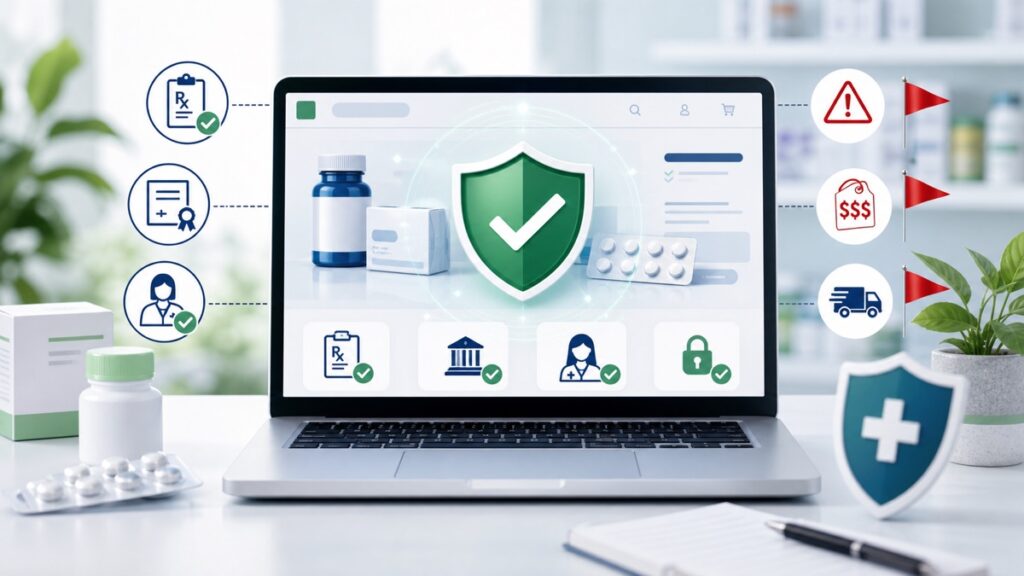
The most dangerous thing about buying medicine online is often not that “the page looks unprofessional,” but that it is deliberately made to look very professional while bypassing prescriptions, pharmacists, licenses, and regulation. For cross-border users, unfamiliar language, the lure of low prices, and social-media advertising further amplify the risk.
1. The first red line: prescription drugs sold without requiring a prescription
The FDA’s BeSafeRx and its consumer tips repeatedly emphasize that a website claiming it can sell prescription drugs without a doctor’s prescription is a high-risk signal. Prescription drugs require a doctor to judge the diagnosis, dosage, contraindications, interactions, and follow-up, and should not be packaged as ordinary cross-border merchandise.
2. The second red line: no visible license, registration information, or responsible entity
The U.S. NABP provides the safe.pharmacy resource, the EU requires legitimate online pharmacies to display a clickable, verifiable common logo, and the UK’s GPhC requires pharmacies providing services online to register and meet standards. The forms differ from country to country, but the common point is that a legitimate pharmacy must be able to state who it is, where it is, and by whom it is regulated.
3. The third red line: no pharmacist or professional available for consultation
If a website provides only an order button, with no pharmacist consultation, drug information, contraindication reminders, privacy policy, or after-sales communication channel, it should not be treated as a trustworthy pharmacy. Pharmacist services are not decoration; they are the key that distinguishes online drug sales from ordinary e-commerce.
4. The fourth red line: abnormal prices, social-media inducements, and unclear overseas sources
The TGA reminds consumers that, before buying medicines, supplements, or medical devices, they should confirm that the supplier is legal and reliable, and be wary of online sellers offering prescription drugs without a prescription. The EMA likewise cautions that falsified medicines can cause serious harm, and that consumers should use registered online pharmacies.
How Chinese-speaking users can check before buying
- Whether a valid prescription is required, or a compliant doctor/pharmacist confirmation process is provided.
- Whether a pharmacy license, physical address, regulatory registration, or verifiable link is displayed.
- Whether there is a pharmacist consultation channel and clear drug-risk warnings.
- Whether the delivery regions, return/exchange boundaries, privacy policy, and drug sourcing are clearly stated.
- Whether prescription drugs, weight-loss drugs, sleeping pills, or hormone products are presented as “fast purchase, no prescription needed.”
A compliant Chinese-language drug platform should also uphold this boundary: products eligible for online retail go into the cart; products that require pharmacist confirmation are confirmed first; and prescription drugs and medicines used at medical institutions are handled only as institution/pharmacy inquiries, not as ordinary orders.
For Japan specifically, there are official numbers on how often a qualified person actually answers: in the FY2025 mystery-shopper round, an online Class-1 consultation was answered by a pharmacist 58.8% of the time. The full breakdown is in our read of that survey.